
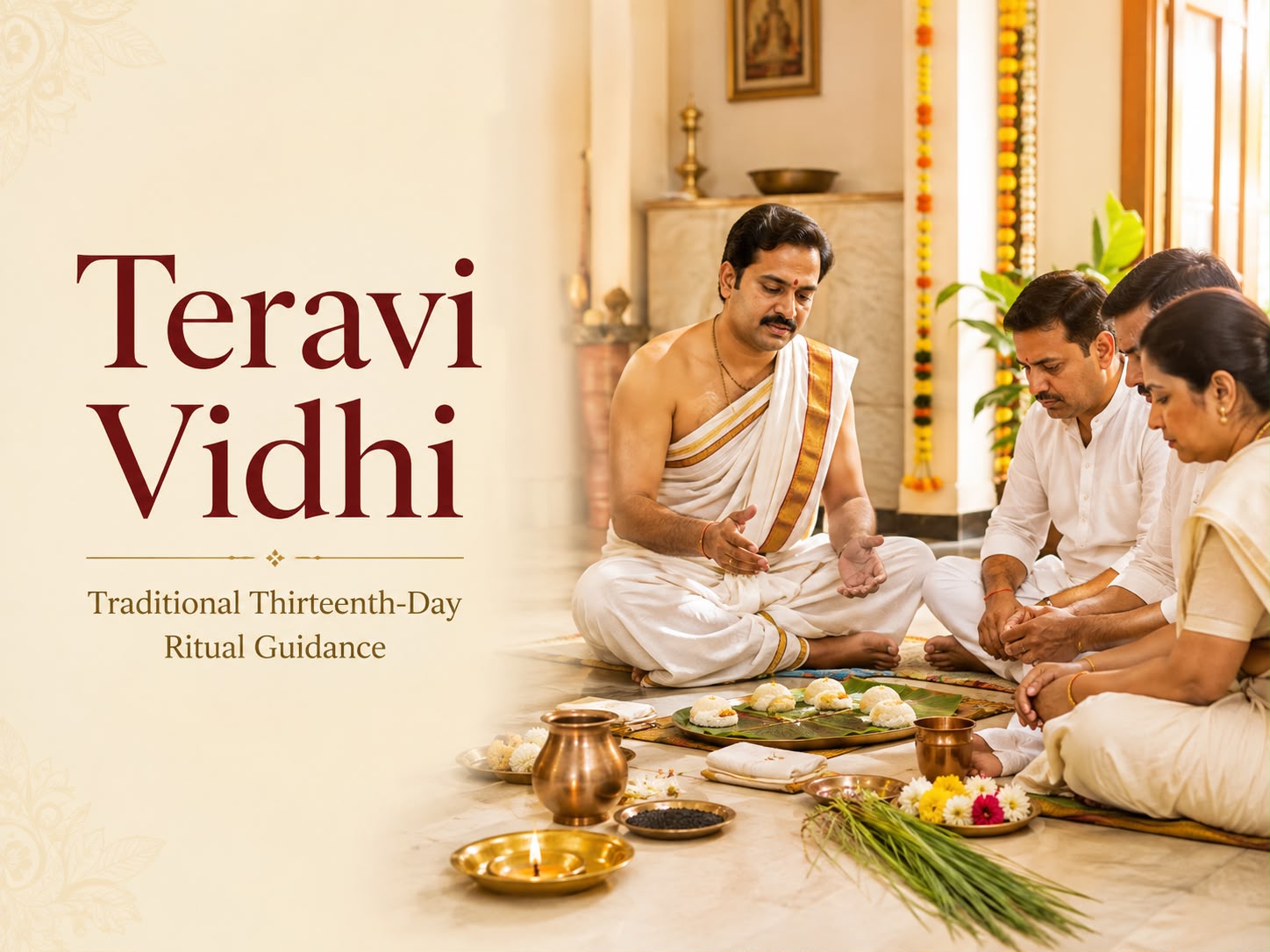
Teravi Vidhi is a family observance commonly associated with the thirteenth day after a death. Its exact form is not identical in every family. The sequence may depend on Kulachar, regional practice, the rites already completed on earlier days and the guidance of the family Purohit. It should therefore be planned as part of the complete post-death ritual sequence, not treated as a generic one-size-fits-all puja.
When Is This Vidhi Performed?
* Usually planned in relation to the thirteenth day after death
* After confirming which rites were completed on the tenth, eleventh and twelfth days
* At home, a ritual venue or another suitable place according to family custom
* On a schedule confirmed by the knowledgeable Purohit and the family
Preparation and Booking Information
Share the deceased person’s full name, Gotra if known, date and time of death, place of death, cremation details and the rites already completed. Also confirm the family tradition, venue and number of participants. The final samagri list must be issued only after the ritual format is confirmed.
Why Choose Shri Avinash Pujari Shastri?
* Traditional Maharashtrian Vedic ritual guidance
* Steps and meaning explained clearly in Marathi, Hindi or English as required
* Ritual scope and samagri discussed before confirmation
* Punctual service by prior appointment in Mumbai and nearby areas
* Respectful, responsible guidance without fear-based guarantees
Book the Vidhi
To discuss the correct date, ritual scope, samagri, venue and Dakshina for Teravi Vidhi in Mumbai,
call or WhatsApp Marathi Pandit Avinash Pujari Shastri on 9702246462.
Final arrangements are confirmed only after the relevant family and ceremony details are reviewed.
A. Yes, when the family tradition, space and ritual requirements permit.
A. Not necessarily. Sapindikaran is a specific ancestral rite; its timing and inclusion vary by tradition.
A. Practices vary. Confirm the date and sequence with the family Purohit after reviewing the rites already completed.